
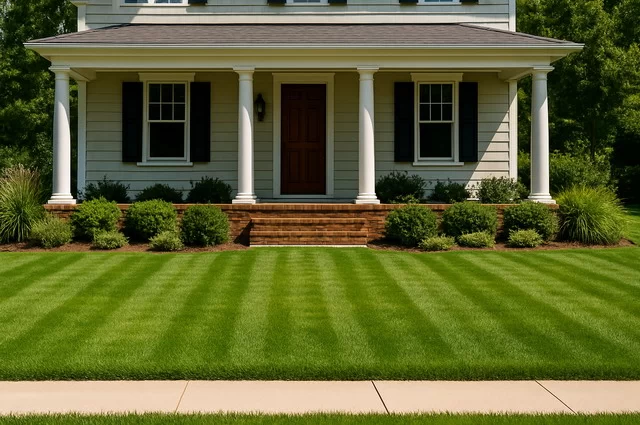
In the United States, maintaining a lawn isn’t just a science; it’s a “hard rule.” You might not expect that something seemingly solely about “greenness and beauty” could lead to fines, legal disputes, and even neighborhood wars.
Lawns aren’t just grown casually; they’re a face-lift.
In many American communities, especially those in middle-class or affluent areas, lawns aren’t just a green feature; they serve as a standard for observing the rules. Many residential complexes are managed by “Homeowners Associations” (HOAs), which have strict requirements for residents’ lawns:
-
Grass must be neatly trimmed, neither too long nor too sparse;
-
No yellowing or blighted patches;
-
No random planting of vegetables or wildflowers;
If you neglect regular care like mowing, watering, and fertilizing, and your lawn becomes “ugly” or “uneven,” don’t blame the HOA for sending you a warning letter or even issuing a fine of hundreds of dollars.
In the United States, are ungrowths fined for ungrowth
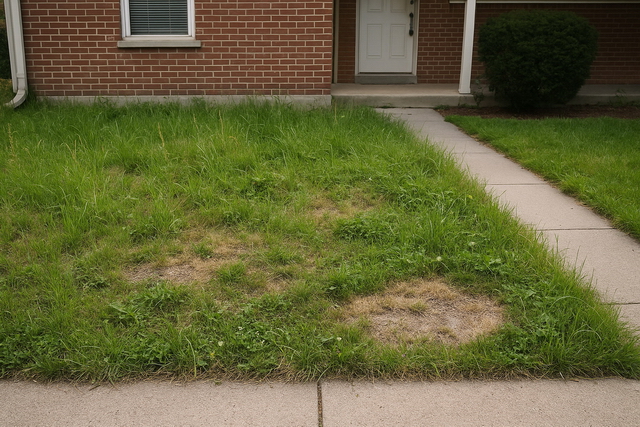
Someone jailed for lawn mowing? Not a legend
In Texas, a resident was deemed “incorrigible” for failing to maintain his lawn for a long time, and was ultimately sentenced to a short prison term. In Florida, an elderly couple was charged with violating community regulations by growing vegetables in their yard instead of their lawn, leading to a years-long legal battle with the local government.
This isn’t an isolated incident. Many municipal or community ordinances in the United States classify “improper lawn maintenance” as a civil violation that “damages public aesthetics” and “affects neighborhood values.”
Is lawn culture about “control” or “civilization”?
On the surface, this is a discussion about “tidiness,” but deeper, it reflects the obsession with “order” in American community culture.
For HOA managers, uniform lawns represent a unified community image, impacting property values and neighborhood harmony. However, for ordinary residents, this “aesthetic standard” that excessively intrudes on private space seems more like a form of “gentle tyranny” of control.
Environmentalists have repeatedly pointed out that America’s lawn culture not only consumes vast amounts of water resources but also uses extensive amounts of herbicides and fertilizers, harming the ecosystem. Furthermore, behind a “perfect lawn” comes high maintenance costs—a fact that is neither environmentally friendly nor necessarily justified.
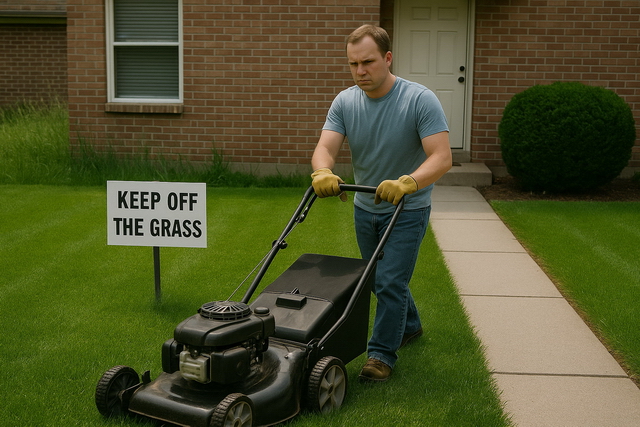
Is it civilization or a hassle? What’s your opinion?
Some say Americans love lawns because they symbolize detached homes; others say the neater the lawn, the more anxious they feel. After all, in a country that values “freedom,” it’s somewhat ironic that even grass can’t grow freely.
So, when you walk through American neighborhoods and see those neat, uniformly colored lawns, consider this: they may not be a symbol of freedom, but rather the result of forced neatness.
Though small, these lawns reflect differences in institutions, cultures, and values. Would you rather mow, spray, and fertilize your lawn weekly to avoid fines, creating a “beautiful lawn in the eyes of others”? Or would you rather let nature flourish freely, even if it’s a little “ugly”? Feel free to share your thoughts in the comments section.
Written and photographed by Easycan Inc. Journalist Shengji Lin